Sep
6
The future of AI in eCommerce stopped being a distant promise years ago. Right now, in this exact moment, it runs quietly behind nearly everything you interact with online.
Personalizing online shopping, selecting posts to show in your social feed, predicting what you will want next, improving website experiences, detecting fraud, analyzing huge datasets, even writing code are some ways it uses artificial intelligence.
There is a myth that AI will replace humans, but in reality, AI will replace inefficiency. Yet fear is natural. It has always been difficult to overcome resistance to major technological revolutions, from the internet to mobile phones. There was a concern that they would upset jobs, disrupt society, and cause chaos. Overall, those inventions led to massive growth, new industries, and a better quality of life. Similarly, AI is following the same path.
In this blog, the future of AI is explained clearly and practically without panic or hype.
The conversation around AI gets loud fast. Some say it will replace every job. Others worry creativity dies completely. A few imagine robot overlords running everything. Most just don’t get what AI actually means.
But all this noise happens for one clear reason: AI marks the first technology capable of thinking not in a human way, but way faster than any person could manage.
It has the power to:
The scary part isn’t what AI in eCommerce does well. The scary part comes from not knowing what happens next.
But here’s the calming reality: AI brings serious power, but it can’t copy human logic, care, gut feelings, moral judgment, or emotional depth. It makes humans better at what they do; it doesn’t wipe them out.
Any technological innovation has been feared by mankind as a threat to its existence. Therefore it is nothing new. Be it nuclear energy, computers, or the internet, every emerging technology or innovation has seen stiff resistance. Technology can inevitably be used in both good and bad ways, the same is the case with Artificial Intelligence. But technology will always find its sweet spot and will benefit mankind like it has been.
AI isn’t some mysterious force. It spots patterns, chews through information, and picks up on examples. Here’s where we stand in 2025.
NLP gives eCommerce AI tools the ability to grasp what words actually mean, not just scan them like a basic text reader.
Thanks to NLP, AI eCommerce solutions now:
That’s exactly why AI chatbots for eCommerce appear everywhere in modern online stores.
Deep learning models skip the manual programming step — they figure out patterns on their own.
They run:
Deep learning lets machines “observe”, “identify”, and “forecast” outcomes.
We’re at a point where AI now:
This bunch includes well-known names such as ChatGPT, LLaMA, DALL·E, Stable Diffusion, and Claude, among others.
AI has the capacity to:
AI lacks the ability to:
Knowing this difference matters when thinking about where AI goes next.
AI is a technological revolution that is changing our lifestyle and livelihood. Let’s dwell on our past to 30-40 years and how things eventually stand with the invention of two major technological revolutions.
To grasp where AI is heading, look at the reaction when the Internet and Mobile phones arrived. Both changed absolutely everything but scared people at first.
These examples help us guess how AI adoption unfolds.
Before internet access spread everywhere, the world moved slowly and stayed disconnected. Getting information instantly wasn’t even a concept. Everything shifted dramatically once the internet took hold.
Life before Internet:
Negative impact of Internet on society:
Case Study 2: Mobile
Mobile phones have transformed how we communicate, run businesses, handle money, and live our daily lives permanently.
Let us discuss how our lives were, before the invention of mobile phones:
The negative impact of mobile on society:
Now, when we study the above two case studies, we cannot deny that there were job losses. Although STD/PCO businesses were wiped out, there came eCommerce. Undoubtedly, eCommerce industry has not only provided mass employment, it has also made the life of common man a zillion times easier. Certainly, a wise-man will always weigh the good with the bad and arrive to an opinion.
The reason I had to take reference to Mobile Technology and Internet Technology is to gather references to fathom what AI Technology can do. Standing in 2024, we have hardly explored the commercial capacity of the giant AI technology. We have only managed to understand the scope of AI. We have created interactive AI models. Many models were created which has startled the world. For example: ChatGPT 3.0, LlaMA, Dall -E 3.0, etc.
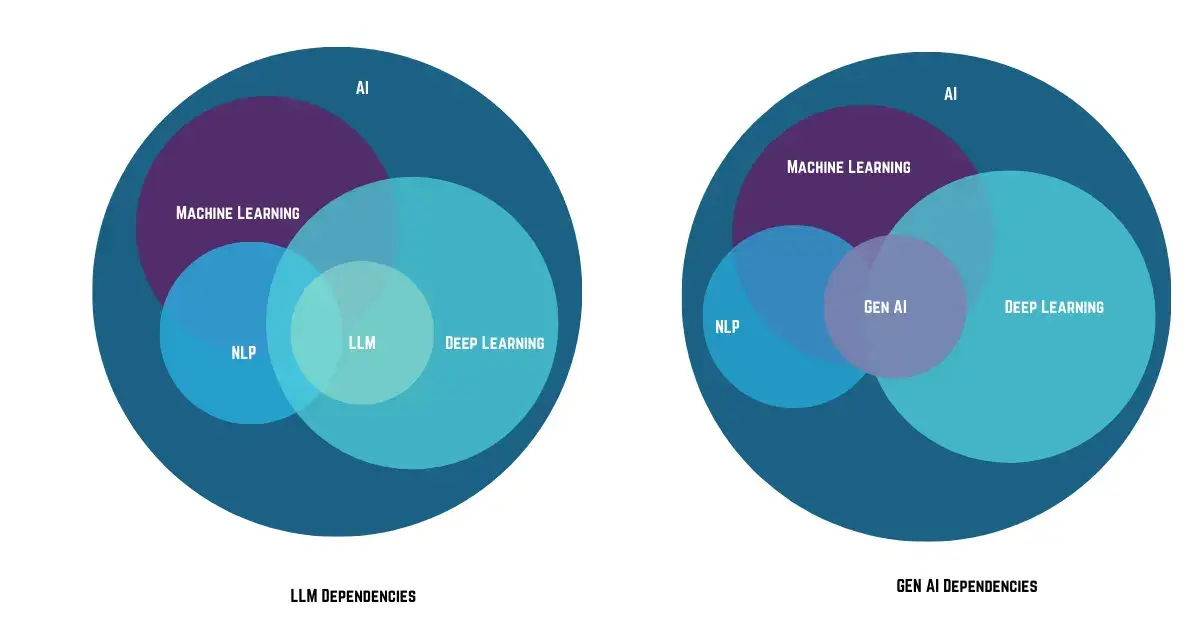
These four points are achieved by training AI models for over a decade with huge data. With the help of Deep Learning, we are achieving unsupervised learning and discovering hidden patterns.
Supervision. Yes, tech giants IBM, Wipro, and ADP are setting up an AI Ethics Board.
No to mention, the reason for such a surveillance team is to bring reliability, trust, fairness, explainability, and security. Specifically it will deal with the nuisance factor of generative AI, Dalle-E, or Deep Fakes. If you can create an image or video of anyone doing anything, or create voice samples identical to someone by just a small one-line text, yes, a regulatory board is absolutely important.
After considering the two case studies we can at least rely on technology. We must have faith that any technological revolution has helped human beings evolve. Therefore with more and more acceptance of AI technology we are looking at a world that will emerge to be smarter, dynamic, informed and aware. Along with that, the establishment of AI Ethics Board is also signalling a strong indication that, a huge commercialisation of AI is not far away. Therefore, AI will change our lifestyle and will help us evolve in a better way.
Let’s examine what AI actually accomplishes right now, and where 2025 puts us on the worldwide technology timeline.
The phase where generative AI felt like a fun experiment ended. In 2025, it will become permanently embedded in daily operations. From product copy and search-friendly articles to customer responses and user experience maps, generative AI supports teams across every department.
Businesses tap into generative AI for:
It turned one marketing person into the output of five people. One programmer into the productivity of three. And one shop owner into someone running a tight, data-smart operation.
GPT-5.1, Llama 3, Claude 3, Gemini 2, these aren’t just fancy text machines anymore. They handle:
LLMs now perform like a valuable team member who:
In areas like retail, eCommerce, healthcare, banking, and logistics, LLMs quickly became must-haves.
Gone are the early days when product suggestions felt completely random. 2025 eCommerce runs on machine learning systems that keep learning every single day.
These systems now:
This explains why AI eCommerce solutions and AI for online shopping stopped being fancy extras. They became the foundation of retail.
AI’s power to “observe” changed online shopping completely.
In 2025, visual features will let customers:
Behind the curtain, retailers use it to:
Computer vision quietly became one of the most significant advantages in modern eCommerce.
Not somewhere down the road. Right this second.
In 2025, AI chatbots successfully manage:
Most basic support positions are now fully automated because AI chatbots answer immediately, reliably, and around the clock.
The point isn’t removing human helpers — it’s clearing away repetitive tasks so human teams tackle valuable problems.
The future of AI doesn’t involve robots conquering humanity or machines becoming our overlords. It revolves around something way more practical, AI becoming the hidden engine driving transactions, choices, personalization, logistics, and digital interactions we never see directly.
Here’s what the AI-powered future truly looks like — grounded in actual technological movement, real industry adoption, and solid economic information.
Most assume AI leads straight to massive job losses. That only tells part of the story.
Sure, AI takes over repetitive support work, simple administrative tasks, and process-heavy jobs. But at the same time, AI creates entirely new job categories — just as the internet and mobile revolutions did.
Fresh roles showing up include:
The total jobs created will FAR exceed the total jobs lost.
The future of buying things online looks nothing like what we knew before. Rather than scrolling through endless product pages, shoppers see precisely what fits their needs — customized by AI.
Sample experiences:
This depth of personalization lifts conversions, cuts down bounces, and makes customers happier.
Predictive analytics in retail will control supply chain choices.
Stock will shift BEFORE demand spikes — because AI models already calculated what’s about to happen.
Future logistics features:
Retailers operate cleaner, quicker, and lose less money.
Customer support is one of the first sectors undergoing massive change.
Within the next several years:
This isn’t about cutting human agents, it’s about removing boring workload so humans focus on situations that truly need compassion.
Visual search in eCommerce is just starting to gain real momentum. Future shoppers lean more on pictures and less on typing.
Imagine this: Someone snaps a photo of shoes they noticed → AI scans the design → recommends 20 similar options → sorts by price range → displays the closest match instantly.
This removes the hassle of old-school search methods.
Coming AI-powered product search systems deliver:
This dramatically boosts product discovery across fashion, furniture, home goods, accessories, and beyond.
Brands manually changing prices is becoming old news.
AI will soon manage pricing in real time — determined by:
AI-based dynamic pricing maximizes earnings without damaging brand reputation.
AR/VR finally reached maturity. The next five years bring:
This isn’t a passing trend — it’s the new UX foundation for online retail.
Whatever your field, AI becomes your internal helper, strategist, and research partner.
For workers, this means:
AI makes individuals 2–10x more capable.
AI became the most confused technology of this decade. People picture robots destroying cities, machines stealing every job, and algorithms controlling humanity. In truth, these worries stem from movies, not from the actual science driving artificial intelligence.
Here are the myths that need to vanish if we want to grasp the real future of AI.
AI brings power, but lacks consciousness. It recognizes patterns, handles massive amounts of information, and generates answers quickly — but it doesn’t grasp feelings, ethics, culture, or intuition. AI supports humans, but it can’t replace human depth, wisdom, or experience. Even the most innovative models need human oversight, correction, and guidance.
This belongs in science fiction. Current AI can’t desire anything, plan independently, form intentions, or act on its own.
Robots follow commands. AI follows training information.
There’s no motivation, no self-awareness, no drive — just probability calculations and pattern matching. Without electricity, data, and human direction, AI accomplishes nothing independently.
History proved the opposite.
When computers arrived, people worried about losing their jobs.
And when the internet arrived, people worried about losing work.
Then, when mobile phones emerged, people worried about losing work.
Every revolution generated more opportunities than it eliminated.
AI removes repetitive, low-value tasks, but it creates huge demand for:
AI isn’t ending careers — it’s shifting the kind of work we perform.
AI remixes existing information, generates ideas, and produces content.
But AI doesn’t grasp the emotional weight behind creativity. Humans create from memory, pain, happiness, art, culture, lived experience, and inspiration, AI can’t duplicate that.
AI assists creativity, but genuine original thinking still flows from humans.
AI makes mistakes. Sometimes big ones. Why? Because AI learns from information created by humans — and humans aren’t perfect.
When information contains bias, the system reflects that bias.
When details are outdated, the system gives outdated responses.
When situations change, AI can misread the intention.
This explains exactly why AI governance and ethics teams exist globally.
AI processes information faster — but decisions still need human judgment.
For example:
AI guides decisions — but it can’t take ownership of them.
AI isn’t dangerous on its own — misusing AI creates danger. Just like the internet, electricity, or nuclear energy, AI needs rules, accountability, and supervision.
That’s why AI ethics boards, international regulations, and safety standards are being built now — not postponed for later.
The coming decade will reshape how humans live, work, build businesses, and interact with technology. The AI revolution isn’t slowing, it’s picking up speed. And if today feels advanced, the next 10 years will feel like we leaped two decades forward in innovation.
Let’s examine what the AI-driven world of 2035 actually looks like — no exaggeration, no sci-fi dreams, and no fear stories.
Regardless of the industry, marketing, finance, healthcare, coding, design, operations, or logistics, AI acts as a second brain.
Professionals won’t just use tools; they’ll work next to an intelligent digital partner.
AI co-pilots handle:
This change makes individuals 2x to 10x more productive without increasing effort.
Forget simple product suggestions. Moving forward, AI in eCommerce platforms deliver unique shopping experiences for every customer.
Each shopper sees a different:
This extreme personalization (powered by machine learning in eCommerce) drastically improves conversions and customer loyalty.
Predictive analytics in retail controls entire pipeline operations with barely any human involvement.
Future systems handle:
AI-driven supply chains run faster, cheaper, and way more precisely.
Rather than clicking and digging through dozens of pages, users simply talk to AI. Future shopping looks like: “Show me black running shoes under $70, available for next-day delivery.”
AI in eCommerce responds with perfect matches immediately. This represents the evolution of conversational AI in eCommerce.
Voice-first browsing becomes standard across:
AI understands intent, preference, urgency, and emotion in real time.
Virtual try-ons evolve from a “nice extra” into a standard requirement.
Shoppers gain the ability to:
The combination of AI and AR/VR redefines product understanding and drastically cuts return rates.
AI in eCommerce stopped being a future concept. It’s here, it’s running, and it’s already reshaping how brands sell, how customers shop, and how businesses grow in 2025 and beyond. From personalized product recommendations to AI-driven supply chains, visual search, predictive analytics, smart chatbots, and automated pricing, AI has become the backbone of modern digital commerce.
Capsquery is a leading AI eCommerce agency in Dallas that lives and breathes WooCommerce, WordPress, Django, Python, and full-scale AI engineering.
Our team builds AI systems that actually make a difference, systems that improve conversions, speed, customer experience, automation, and backend efficiency without breaking the business flow.
If you want your eCommerce business to stay competitive, relevant, and future-ready, the time to act is now. As the best AI development company in Houston, Dallas, Cupertino and more, we ensure you stay ahead with AI in eCommerce, not behind. Let’s build the next version of your business, smarter, faster, and AI-powered from the core.
Website Development | Mobile App Development | Application Development
We will definitely get back in touch with you over mail within 12 Hours.
In-case you have not heard from us within 12 hours, kindly check your spam once.
I'm a software consultant. I've 7+ years of industry experience. I'd love to connect with you and brainstorm your custom software needs. It's my responsibility to find you the best solution.
ANAND GUPTA
Drop your details and we'll get in touch with you within 12 hours.
Reach us for

Talk to us